
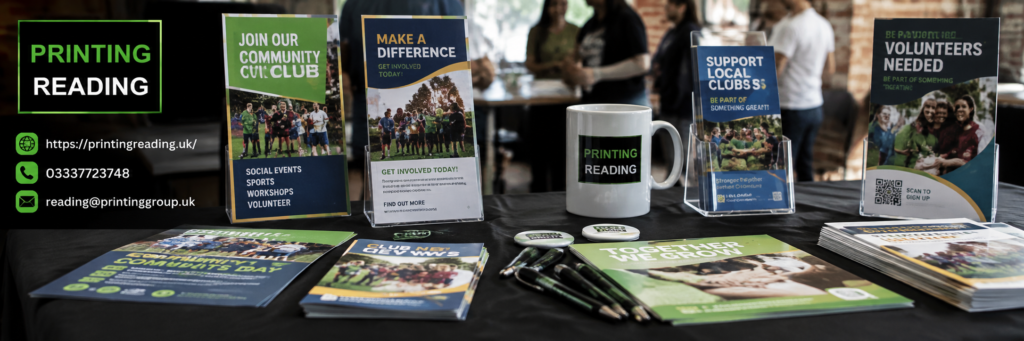
Local clubs and organisations play an important part in Reading. Sports clubs, charities, community groups, societies, youth organisations and voluntary groups all need ways to keep existing members informed while also reaching new people.
Reading provides plenty of opportunities for local groups to be seen. The town centre attracts residents, workers, students and visitors, while areas such as Caversham, Tilehurst, Whitley, Earley and nearby Woodley have their own active communities. Reading’s strong transport connections also mean that many people travel into and around the town for work, education, shopping and events.
For a local organisation, good marketing does not need to be complicated. Clear information, regular communication and a mix of online and printed materials can often be more useful than trying to promote the group everywhere at once. Well-planned printing services in Reading can support this approach, particularly when clubs need physical materials for events, meetings, membership drives and local activities.
Make Your Club Visible Around Reading
One of the first challenges for any local club is simply making people aware that it exists. Someone may be interested in joining a sports team, community project or social group but have no idea what is available nearby.
Printed flyers and leaflets can help close that gap. They can explain what the organisation does, who can join, where meetings take place and how to make contact. The information should be easy to scan rather than filling every available space with text.
Location also matters. Reading town centre, including Broad Street and the surrounding shopping streets, receives a different mix of people from residential parts of Caversham, Tilehurst or Whitley. A club should think about where its likely members spend their time and focus promotion in suitable places where permission has been given to display or distribute material.
Flyer printing can work well for short campaigns such as an open day, registration period or fundraising event. Leaflet printing may be more suitable when an organisation needs to explain its activities in greater detail.
Use Local Events to Meet People Face to Face
Reading has a busy calendar of community, cultural, sporting and public events. These occasions give clubs and organisations a chance to speak directly with local residents rather than relying entirely on social media.
A community group attending an event may need a banner to make its stand easy to identify. A sports club could use posters and flyers to promote trial sessions. A charity may need leaflets explaining its work and how people can volunteer.
Reading is also home to major venues and public spaces, while smaller activities take place in community centres, sports facilities, schools and local meeting spaces across the area. The right marketing material depends on the setting. A small indoor meeting may only need leaflets and a sign, while an outdoor event may call for banner printing or other large format printing that can be read from a distance.
The main aim should be clarity. People passing a stand should be able to understand the organisation’s name and purpose without having to stop and read a long explanation.
Help New Members Understand What You Offer
Attracting attention is only the first stage. Once someone becomes interested, they need clear information about what happens next.
Clubs can use brochures or booklets to provide details that would be difficult to fit onto a single flyer. A sports organisation, for example, might include training times, membership information, age groups and contact details. A community association could explain its regular activities, upcoming meetings and ways for residents to become involved.
Brochure printing can also be useful for organisations that provide several services or run different projects throughout Reading. Booklet printing may suit annual programmes, member guides, event schedules or information packs.
Printed material should match the information available online. If meeting times or contact details have changed, old leaflets should not continue to circulate. Keeping information consistent helps avoid confusion and makes it easier for people to take the next step.
Build Recognition at Meetings and Community Activities
Local marketing is not only about attracting new members. It can also help an organisation look organised and make its volunteers easier to identify.
T shirt printing can be useful for volunteers, event teams and club members. Matching printed shirts can make it clear who is helping at a registration desk, community event or fundraising activity. Sports clubs may also use printed clothing for training sessions, tournaments and club events.
Workwear printing can serve a similar purpose for organisations whose volunteers or staff regularly work outdoors or carry out practical community activities.
Printed signs can also make meetings easier to find, particularly when several groups use the same venue. Posters can direct visitors towards registration areas, meeting rooms or activity spaces.
These materials do not need complicated designs. A club name, logo and clear contact information are often enough.
Connect with Reading’s Different Communities
Reading is not one single audience. The town includes long-established residential communities, a large working population and a substantial student community. The University of Reading also brings students and staff into the area, while Reading railway station and the M4 provide important connections with other parts of Berkshire and the wider Thames Valley.
For clubs, this means marketing should be planned around the people they actually want to reach.
A student-focused society may use different locations and messages from a club aimed at families. A business networking organisation might concentrate on the town centre and commercial areas, while a neighbourhood group may get better results from promotion within a few nearby streets and community venues.
There is little benefit in printing thousands of leaflets if most are distributed to people who are unlikely to be interested. Smaller, well-targeted campaigns can make better use of a club’s budget.
Business card printing can also be useful for organisers who regularly attend meetings and networking events. A simple card containing the organisation’s website, email address and social channels gives people an easy way to reconnect later.
Plan Printed Marketing Around Your Calendar
Many clubs have predictable busy periods. Sports organisations may recruit before a new season. Community groups may need more promotion before a public meeting. Charities often plan materials around fundraising activities, while societies may promote programmes several weeks before they begin.
Planning ahead gives organisers time to check dates, spelling, contact information and quantities before printing.
However, local organisations sometimes need materials at short notice. An additional event may be confirmed, a meeting location may change or more flyers may be needed after an unexpectedly strong response. Same day printing in Reading can be useful in these situations when there is not enough time for a normal production schedule.
Keeping basic artwork ready can make urgent orders easier. Clubs can maintain editable versions of their logo, contact details and standard designs, then update dates or event information when needed.
Conclusion
Marketing a local club or organisation in Reading is mainly about being visible in the right places and giving people clear reasons to get involved. From Reading town centre to Caversham, Tilehurst, Whitley, Earley and surrounding communities, different audiences require different approaches.
Flyers and leaflets can introduce an organisation, posters and banners can support events, brochures and booklets can provide detailed information, and printed clothing can help members and volunteers be recognised.
The most useful approach is to connect printed marketing with the club’s actual activities. Rather than producing material simply because other organisations do it, consider who needs to see it, where they are likely to see it and what information they need next. For local clubs working with limited time and budgets, that practical approach can make promotion easier to manage.